

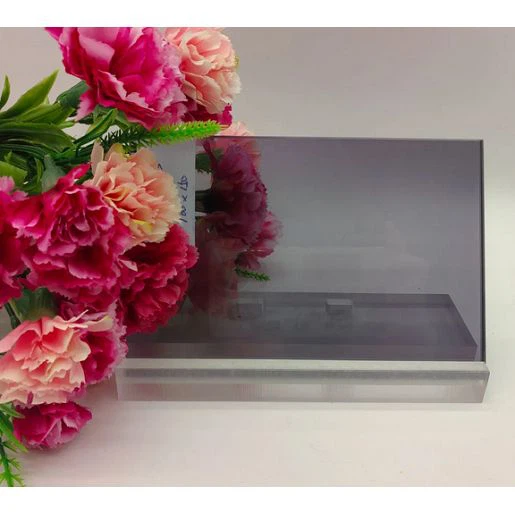


What is grey laminated glass
Grey Laminated Glass is a type of safety glass made by permanently bonding two or more pieces of grey glass through PVB film, SGP film or other high-performance interlayer films under high temperature and high pressure. After the glass is closely combined with the film, even if it breaks due to strong impact, the fragments will still firmly adhere to the surface of the film and are not easy to fall off or scatter, thereby effectively reducing the risk of personal injury and property damage. Therefore, it is widely used in parts of modern buildings with high safety requirements.
In recent years, architectural design has placed greater emphasis on the unity of building appearance and energy-saving performance. Compared with ordinary transparent laminated glass, grey laminated glass can effectively reduce the entry of solar radiation heat into the room while maintaining good lighting effects, alleviate the visual discomfort caused by glare, and make the building space more comfortable. The soft and steady grey tone can naturally blend with metal curtain walls, stone facades and modern architectural styles, endowing buildings with a more simple and grand visual effect. Therefore, it has become a common glass product in high-end residences, office buildings, hotels and commercial complexes.
Safety has always been the greatest value of laminated glass. When the glass is impacted, the interlayer film can absorb part of the impact energy and firmly fix the broken glass. Even if the glass develops cracks, it can maintain the overall structural integrity for a certain period of time, thus buying more time for personnel evacuation and subsequent maintenance. Compared with ordinary glass, this structure not only enhances the safety level of buildings but also improves the impact resistance of the glass, making it more suitable for densely populated areas and high-rise buildings.
In addition to its safety advantages, grey laminated glass also has excellent sound insulation performance. Intermediate film can effectively weaken the transmission of sounds of different frequencies, especially having a good isolation effect on traffic noise and urban environmental noise, which can create a quieter and more comfortable indoor environment for office buildings, hotels, apartments and residences. If used in combination with Low-E glass or insulating structures, it can further enhance the energy-saving effect of buildings and meet the requirements of modern green buildings for energy conservation and environmental protection.
Quality Assurance
As a professional enterprise with twenty years of experience in manufacturing architectural glass, Zibo Zhonggang Building Material Co., Ltd. A complete quality management system has been established. From the procurement of raw sheets, interlayer lamination to the inspection of finished products, every process is strictly carried out in accordance with international standards. The product has undergone size inspection, interlayer bonding performance test, impact resistance test, heat resistance test and appearance quality inspection to ensure that each piece of glass has stable quality and reliable performance in use.


PACKAGE
1.Iron/Plastic belt for consolidation.
2.Seaworthy wooden crates.
3.Loading and fixation crates with container experience. And we send the loading pictures for you after we loading.


FAQ
Q1: What are the differences between grey laminated glass and ordinary transparent laminated glass?
Hot Tags: Grey Laminated Glass, China Grey Laminated Glass manufacturers, suppliers, factory, showroom glass for construction, skyscraper laminated glass, healthcare construction glass, need laminated glass, laminated glass quotation, shower glass for construction


