

Tempered glass is actually a kind of prestressed glass. To enhance the strength of the glass, chemical or physical methods are usually employed to create compressive stress on the surface of the glass. When the glass is subjected to external forces, the surface stress is first offset, thereby increasing its load-bearing capacity and improving its tensile strength. Tempered glass has two main advantages. First, its strength is several times higher than that of ordinary glass. Its bending strength is 3 to 5 times that of ordinary glass, and its impact strength is 5 to 10 times that of ordinary glass. While enhancing its strength, it also improves safety. Safety in use is the second major advantage of tempered glass. Its increased load-bearing capacity improves its fragile nature. Even if tempered glass breaks, it shatters into small pieces without sharp corners, greatly reducing the harm to the human body. The resistance to sudden temperature changes of tempered glass is 2 to 3 times higher than that of ordinary glass. Generally, it can withstand temperature differences of more than 150 ° C, which has a significant effect on preventing thermal cracking.

Tempered glass is three to five times stronger than ordinary glass. This is mainly attributed to its unique manufacturing process, which creates compressive stress on the glass surface and tensile stress inside. This stress distribution makes tempered glass less likely to break when subjected to external force impacts.
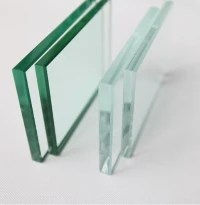
In contrast, ordinary glass is more prone to breakage when subjected to external forces, and the fragments produced after breakage are sharp, which can easily cause injury.
Even if tempered glass breaks, it will form smaller and relatively dull fragments, thereby reducing the risk of harm to the human body.
Different tempered glasses can withstand different impact forces. They are classified by tempering degree as follows:
Tempered glass: Degree of tempering =2-4N/cm, surface stress α of tempered glass for glass curtain walls ≥95Mpa;
2. Semi-tempered glass: Tempering degree =2N/cm, surface stress of semi-tempered glass for glass curtain walls 24Mpa≤α≤69Mpa;
3. Super tempered glass: Tempering degree >4N/cm.
Tempered glass is a type of safety glass. To enhance the strength of the glass, chemical or physical methods are usually employed to create compressive stress on the surface of the glass. When the glass is subjected to external forces, the surface stress is first offset, thereby increasing its load-bearing capacity and enhancing its own resistance to wind pressure, temperature changes, and impact. It is important to distinguish it from fiberglass reinforced plastic.
At the quenching temperature of glass, the internal energy of the glass particles exactly minimizes the distance between the outermost electrons of adjacent particles. Such an appropriate cooling rate enables the establishment of the best relationship between glass molecules and a near-zero stress equilibrium relationship. The best relationship maximizes the intensity. Zero stress does not mean there is no stress at all. Instead, it refers to the interlocking and balanced stress among molecules. As a result, if the stress of any molecule is disrupted, all the stress in the entire molecule will be affected. So tempered glass is much stronger than ordinary glass, but it will break into many small pieces.


