


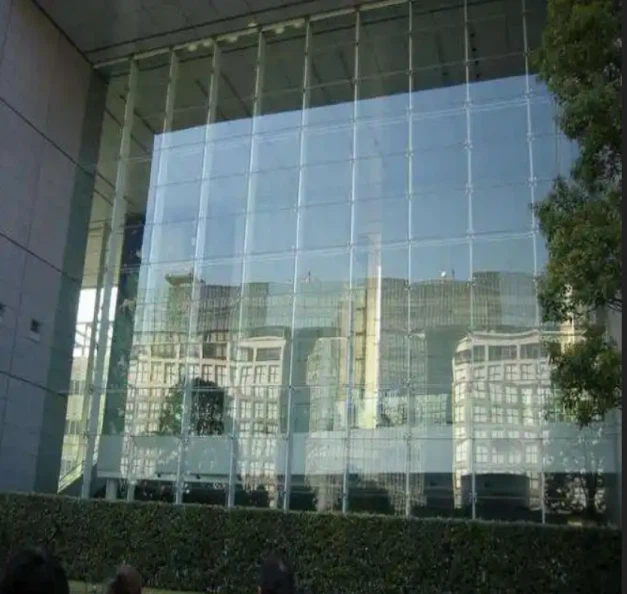

What is insulated interlayer glass?
Interlayer insulating glass is a composite glass product that combines the dual characteristics of Interlayer glass and insulating glass. It has multiple advantages such as safety, sound insulation and heat preservation, and is widely used in construction, automobiles and other fields.

Product Features
Multi-layer structure design
Good heat insulation performance
Improve the sound insulation of buildings
Core performance advantages
Safety
The PVB film in the interlayer part has strong impact resistance and can prevent explosion and theft. Even if it breaks, it remains intact, reducing the risk of injury.
Sound insulation and noise reduction
The hollow layer blocks high-frequency noise (such as traffic noise), while the interlayer film absorbs low-frequency noise (such as the roar of machines). The overall sound insulation effect is superior to that of ordinary insulating glass.
Thermal insulation and energy conservation
The hollow layer reduces heat conduction. Combined with the Low-E coating, it can further enhance the insulation performance and reduce the energy consumption of air conditioning/heating.
Uv protection
PVB film can block over 99% of ultraviolet rays, protecting indoor furniture and floors from fading.
Composite structure design and functional configuration
The location of the laminated section: According to the design drawings, determine whether the laminated glass is located on the indoor side, outdoor side or other designated positions.
The number of glass layers and thickness: Calculate and confirm in combination with the glass size, support conditions, usage environment and project specifications.
Hollow cavity design: Select the appropriate cavity configuration based on the window frame system, installation space and project performance goals.
Intermediate layer material: Select appropriate materials based on the required optical performance, structural requirements and applicable standards.
Surface treatment and color: Transparent, ultra-white, colored, Low-E or other applicable glass combinations can be evaluated, but the compatibility of different materials and processing techniques needs to be confirmed.
Comparison with other types of glass
|
Type |
Insulated interlayer glass |
Ordinary insulating glass |
Single layer interlayer glass |
|
Safety |
High (impact-resistant + anti-shattering) |
Low (falling off after breaking) |
High (only explosion-proof in the interlayer) |
|
Sound insulation |
Excellent (Double barrier) |
Better (only the hollow layer) |
General (without hollow layer) |
|
Heat insulation |
Superior (Hollow + Optional Low-E) |
Superior (Hollow layer) |
No insulation layer |
|
Cost |
Higher |
Medium |
Higher |


PACKAGE
1. Seaworthy wooden crates.
2. Iron/Plastic belt for consolidation.
3. loading and fixation crates with container experience. And we send the loading pictures for you after we loading.


FAQ
Q1: What is insulating interlayer glass?
Hot Tags: insulated interlayer glass, insulated interlayer glass manufacturers, suppliers, factory, residential insulated glass, machinery for insulated glass manufacturing, smoke control insulated glass, water penetration testing of insulated glass, uv resistant insulated glass, commercial insulated glass


