


Hey there! As a supplier of Sandblast Tempered Glass, I often get asked how it stacks up against mirrored glass. In this blog post, I'm gonna break down the differences between these two types of glass, so you can make an informed decision for your next project.
Appearance
Let's start with how they look. Mirrored glass is well - known for its reflective surface. It's like a big, shiny mirror that can bounce light around a room. When you look at it, you see your reflection clearly, and it can create a sense of space and light in an area. It's super popular in places like dressing rooms, commercial buildings' facades, and high - end interior designs where a sleek and modern look is desired.
On the other hand, Sandblast Tempered Glass has a more diffused and frosted appearance. The sandblasting process creates a rough surface on the glass, which scatters light instead of reflecting it like a mirror. This gives it a soft, hazy look that can add a touch of privacy while still allowing some light to pass through. It's great for areas where you want to let in natural light but don't want people to see clearly through the glass, like bathroom windows or office partitions.
If you're interested in the look of Sandblast Tempered Glass, you can check out Sandblast Tempered Glass on our website for more details.
Functionality
When it comes to functionality, both types of glass have their own strengths. Mirrored glass is mainly used for reflection. In addition to its decorative uses, it can also be used in optical applications, like telescopes or microscopes. In architecture, it can be used to reflect sunlight away from a building, helping to reduce the heat inside during hot days.
Sandblast Tempered Glass, however, has different functional advantages. First of all, it's tempered. Tempering is a process that makes the glass stronger and more resistant to breakage. If it does break, it shatters into small, relatively harmless pieces instead of large, sharp shards. This makes it a safer option, especially in areas where there's a risk of impact, like in schools, public buildings, or homes with kids and pets.
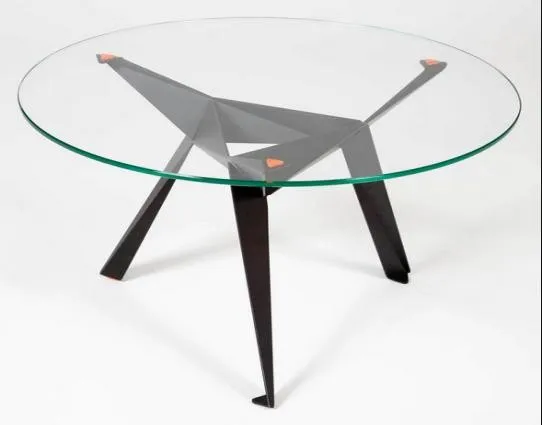

The frosted surface of Sandblast Tempered Glass also offers privacy. You can use it in areas where you need to separate spaces without completely blocking the light. For example, in a conference room, you can use Sandblast Tempered Glass partitions to create a private meeting area while still maintaining an open and airy feel. And if you're thinking about using tempered glass for a tabletop, Tempered Glass Table Top on our site shows some great options.
Durability
Durability is an important factor to consider when choosing glass. Mirrored glass can be quite durable, but its reflective coating can be prone to scratching and damage over time. If it's exposed to harsh chemicals or abrasive materials, the coating may start to peel or fade, which can affect its appearance and performance.
Sandblast Tempered Glass, thanks to the tempering process, is generally more durable. It can withstand higher levels of heat, cold, and impact compared to regular glass. The sandblasted surface is also relatively resistant to scratches, as long as you don't use extremely abrasive cleaners on it. However, like any glass, it's still important to handle it with care to avoid damage.
Cost
Cost is always a consideration in any project. Mirrored glass can be more expensive, especially if it's high - quality with a good reflective coating. The cost can also vary depending on the size, thickness, and the complexity of the installation.
Sandblast Tempered Glass is often more budget - friendly. The tempering process is a standard procedure, and the sandblasting can be done relatively quickly and cost - effectively. However, the final cost will still depend on factors like the size, thickness, and any additional treatments or customizations you may need.
Installation
Installing mirrored glass can be a bit tricky. Because of its reflective surface, it needs to be installed carefully to ensure that there are no air bubbles or imperfections that could affect the reflection. It also requires a clean and smooth surface for proper adhesion.
Sandblast Tempered Glass is generally easier to install. Since it doesn't have a reflective coating that needs to be protected, it can be handled more freely during the installation process. However, as with any glass installation, it's important to follow the proper safety procedures and use the right tools.
Maintenance
Maintenance for both types of glass is relatively straightforward. For mirrored glass, you need to be careful when cleaning it. Use a mild glass cleaner and a soft cloth to avoid scratching the reflective coating. Avoid using abrasive cleaners or rough sponges.
Sandblast Tempered Glass is also easy to clean. You can use a regular glass cleaner and a soft cloth. The frosted surface may collect a bit more dust, but a gentle wipe will usually do the trick. If you want to learn more about a similar type of glass, Frost Tempered Glass on our website has some useful information.
Applications
Mirrored glass is commonly used in:
- Dressing rooms and bathrooms for its reflective properties.
- Commercial buildings' facades to create a modern and eye - catching look.
- Interior design elements, like mirrored walls or furniture, to add a sense of space.
Sandblast Tempered Glass is used in:
- Bathroom windows and office partitions for privacy and light diffusion.
- Tabletops, as it's strong and has a unique look.
- Public buildings and schools for safety reasons.
In conclusion, both Sandblast Tempered Glass and mirrored glass have their own unique features and benefits. If you need a reflective surface for decoration or optical applications, mirrored glass might be the way to go. But if you're looking for a more budget - friendly, durable, and privacy - providing option, Sandblast Tempered Glass is a great choice.
If you're interested in purchasing Sandblast Tempered Glass for your project, I'd love to have a chat with you. We can discuss your specific needs, the best options for your budget, and how we can get the glass to you in a timely manner. Just reach out, and we can start the conversation about making your project a success.
References
- Glass Association of North America. Various publications on glass properties and applications.
- Architectural Digest. Articles on different types of glass used in architecture and interior design.


